

Sikh Dharma Ministry

  • Minister Login
  • Resources
    • Minister Directory
    • Ceremonies & Practices
    • Courses & Events
    • Books, Lectures, Video & Web
    • Trauma-Informed Seva in Crisis and Disaster
  • About Us
    • Our History and Mission
    • Office of the Secretary of Religion
    • Ministry Newsletter
    • The Siri Singh Sahib
    • Sikh Dharma International
    • Becoming a Sikh Dharma International Minister
    • Code of Ethics for Sikh Dharma International Ministers
  • Minister Login
  • Resources
    • Minister Directory
    • Ceremonies & Practices
    • Courses & Events
    • Books, Lectures, Video & Web
    • Trauma-Informed Seva in Crisis and Disaster
  • About Us
    • Our History and Mission
    • Office of the Secretary of Religion
    • Ministry Newsletter
    • The Siri Singh Sahib
    • Sikh Dharma International
    • Becoming a Sikh Dharma International Minister
    • Code of Ethics for Sikh Dharma International Ministers
  • Minister Login
  • Resources
    • Minister Directory
    • Ceremonies & Practices
    • Courses & Events
    • Books, Lectures, Video & Web
    • Trauma-Informed Seva in Crisis and Disaster
  • About Us
    • Our History and Mission
    • Office of the Secretary of Religion
    • Ministry Newsletter
    • The Siri Singh Sahib
    • Becoming a Sikh Dharma International Minister
    • Code of Ethics for Sikh Dharma International Ministers
    • Sikh Dharma International
  • Minister Login
  • Resources
    • Minister Directory
    • Ceremonies & Practices
    • Courses & Events
    • Books, Lectures, Video & Web
    • Trauma-Informed Seva in Crisis and Disaster
  • About Us
    • Our History and Mission
    • Office of the Secretary of Religion
    • Ministry Newsletter
    • The Siri Singh Sahib
    • Becoming a Sikh Dharma International Minister
    • Code of Ethics for Sikh Dharma International Ministers
    • Sikh Dharma International

Current Newsletter – Table of Contents

#101 – 2026 Newsletter (Third Quarter)

Secretary of Religion Column (2026 Third Quarter)

Minister News & Notes (2026 Third Quarter)

The Guru as our Sustainer

The Guru Carries Me

Gobind: The Sustainer

Beauty and Order in the Guru’s Court

In Memoriam – SS Sangeet Kaur Khalsa

Previous Issues


Meet the Newsletter Team


Navigation Tips
Page through current and archived articles. Click on the article link in the upper right of each page (example: Secretary of Religion Column>>) OR use the Table of Contents links in the left column for the Current Newsletter. 


We welcome comments and feedback on this newsletter and our website. Please contact [email protected]. 

The views expressed in the articles on this website are those of the various authors and not necessarily those of the Office of the Secretary of Religion or Sikh Dharma International.

« Minister News and Notes (Summer 2010)
Living in Simran »
The Guru’s Langar (Free Kitchen)

The Guru’s Langar (Free Kitchen)

The tradition of Langar expresses the ideals of equality, sharing, and the oneness of all humankind; an essential part of any Gurdwara is the Langar or free kitchen. Here the food is cooked by sevadars and is served without discrimination to all. After the Sadh Sangat has participated in any ceremony, they are served the Guru’s Langar.

The tradition of Langar expresses the ideals of equality, sharing, and the oneness of all humankind. It was inspired by Guru Nanak’s act of serving food to wandering holy men when given money by his father to strike a good bargain. The practice of serving food to all was started with Guru Nanak’s Sikhs at Kartarpur.

Guru Angad Dev Ji continued the Langar at Khadoor Sahib and it was organized by his wife, Mata Khivi. At Goindwal, during the time of Guru Amar Das Ji, a rule was instituted that anyone who wanted to have a meeting with the Guru (receive his blessing) would have to eat food from the Langar.

Even when the Emperor of India came to see Guru Amar Das, he was made to sit in pangat (where Langar is served) before meeting the Guru. From that time forward, at Goindwal, Langar is served 24 hours a day.

Simple, Nourishing Food
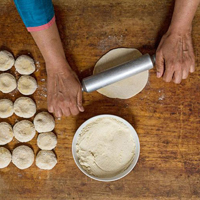
The Guru’s Langar is always vegetarian and traditionally is made up of simple, nourishing food. Strict rules of hygiene and cleanliness are important when preparing the Langar (i.e., washed hands, never tasting it while cooking). Individuals with communicable diseases should not participate in the preparation of Langar. It is also suggested that Gurbani is recited during the preparation.

When the Langar is ready, a small portion of each of the dishes is placed in a steel plate or bowls and placed in front of the Siri Guru Granth Sahib. The Ardas includes the blessing of the Langar, and a kirpan is passed through each item of food after the Guruprashad has been blessed.

The blessing of the langar with Ardas can be done anywhere, in case the Langar needs to be served before the completion of the Gurdwara ceremony. The Langar should not be eaten until the Ardas has been recited over it. After the Ardas is completed, each item of food is returned to its original pot and the blessings are passed to the entire Langar.

When serving the Langar, the servers must observe strict rules of cleanliness and hygiene. Servers should not touch the serving utensils to the plates of those they serve. When serving foods by hand, such as chapatis or fruit, the servers’ hands should not touch the hand or plate of those they are serving. Those serving should wait until all others have been completely served before they sit down to eat themselves.


Reprinted from “Victory and Virtue: Ceremonies and Code of Conduct of Sikh Dharma,” published by the Office of the Bhai Sahiba of Sikh Dharma of the Western Hemisphere. To purchase this manual online, visit Sikh Dharma International or visit SikhNet.com for an online version. Please feel free to submit your dharmic questions to [email protected].


« Minister News and Notes (Summer 2010)
Living in Simran »
The Guru’s Langar (Free Kitchen)

The Guru’s Langar (Free Kitchen)

The tradition of Langar expresses the ideals of equality, sharing, and the oneness of all humankind; an essential part of any Gurdwara is the Langar or free kitchen. Here the food is cooked by sevadars and is served without discrimination to all. After the Sadh Sangat has participated in any ceremony, they are served the Guru’s Langar.

The tradition of Langar expresses the ideals of equality, sharing, and the oneness of all humankind. It was inspired by Guru Nanak’s act of serving food to wandering holy men when given money by his father to strike a good bargain. The practice of serving food to all was started with Guru Nanak’s Sikhs at Kartarpur.

Guru Angad Dev Ji continued the Langar at Khadoor Sahib and it was organized by his wife, Mata Khivi. At Goindwal, during the time of Guru Amar Das Ji, a rule was instituted that anyone who wanted to have a meeting with the Guru (receive his blessing) would have to eat food from the Langar.

Even when the Emperor of India came to see Guru Amar Das, he was made to sit in pangat (where Langar is served) before meeting the Guru. From that time forward, at Goindwal, Langar is served 24 hours a day.

Simple, Nourishing Food

The Guru’s Langar is always vegetarian and traditionally is made up of simple, nourishing food. Strict rules of hygiene and cleanliness are important when preparing the Langar (i.e., washed hands, never tasting it while cooking). Individuals with communicable diseases should not participate in the preparation of Langar. It is also suggested that Gurbani is recited during the preparation.

When the Langar is ready, a small portion of each of the dishes is placed in a steel plate or bowls and placed in front of the Siri Guru Granth Sahib. The Ardas includes the blessing of the Langar, and a kirpan is passed through each item of food after the Guruprashad has been blessed.

The blessing of the langar with Ardas can be done anywhere, in case the Langar needs to be served before the completion of the Gurdwara ceremony. The Langar should not be eaten until the Ardas has been recited over it. After the Ardas is completed, each item of food is returned to its original pot and the blessings are passed to the entire Langar.

When serving the Langar, the servers must observe strict rules of cleanliness and hygiene. Servers should not touch the serving utensils to the plates of those they serve. When serving foods by hand, such as chapatis or fruit, the servers’ hands should not touch the hand or plate of those they are serving. Those serving should wait until all others have been completely served before they sit down to eat themselves.


Reprinted from “Victory and Virtue: Ceremonies and Code of Conduct of Sikh Dharma,” published by the Office of the Bhai Sahiba of Sikh Dharma of the Western Hemisphere. To purchase this manual online, visit Sikh Dharma International or visit SikhNet.com for an online version. Please feel free to submit your dharmic questions to [email protected].


Current Newsletter

#101 – 2026 Newsletter (Third Quarter)

Secretary of Religion Column (2026 Third Quarter)

Minister News & Notes (2026 Third Quarter)

The Guru as our Sustainer

The Guru Carries Me

Gobind: The Sustainer

Beauty and Order in the Guru’s Court

In Memoriam – SS Sangeet Kaur Khalsa

Previous Issues


Ministry Newsletter Team

CONTACT US:  [email protected]  PO Box 2213 | Espanola, NM 87532 | USA

© 2015-2026 The Office of the Secretary of Religion, Sikh Dharma International | All Rights Reserved | Site by Khalsa Designs | Photography Credits