

Sikh Dharma Ministry

  • Minister Login
  • Resources
    • Minister Directory
    • Ceremonies & Practices
    • Courses & Events
    • Books, Lectures, Video & Web
    • Trauma-Informed Seva in Crisis and Disaster
  • About Us
    • Our History and Mission
    • Office of the Secretary of Religion
    • Ministry Newsletter
    • The Siri Singh Sahib
    • Sikh Dharma International
    • Becoming a Sikh Dharma International Minister
    • Code of Ethics for Sikh Dharma International Ministers
  • Minister Login
  • Resources
    • Minister Directory
    • Ceremonies & Practices
    • Courses & Events
    • Books, Lectures, Video & Web
    • Trauma-Informed Seva in Crisis and Disaster
  • About Us
    • Our History and Mission
    • Office of the Secretary of Religion
    • Ministry Newsletter
    • The Siri Singh Sahib
    • Sikh Dharma International
    • Becoming a Sikh Dharma International Minister
    • Code of Ethics for Sikh Dharma International Ministers
  • Minister Login
  • Resources
    • Minister Directory
    • Ceremonies & Practices
    • Courses & Events
    • Books, Lectures, Video & Web
    • Trauma-Informed Seva in Crisis and Disaster
  • About Us
    • Our History and Mission
    • Office of the Secretary of Religion
    • Ministry Newsletter
    • The Siri Singh Sahib
    • Becoming a Sikh Dharma International Minister
    • Code of Ethics for Sikh Dharma International Ministers
    • Sikh Dharma International
  • Minister Login
  • Resources
    • Minister Directory
    • Ceremonies & Practices
    • Courses & Events
    • Books, Lectures, Video & Web
    • Trauma-Informed Seva in Crisis and Disaster
  • About Us
    • Our History and Mission
    • Office of the Secretary of Religion
    • Ministry Newsletter
    • The Siri Singh Sahib
    • Becoming a Sikh Dharma International Minister
    • Code of Ethics for Sikh Dharma International Ministers
    • Sikh Dharma International

Current Newsletter – Table of Contents

#101 – 2026 Newsletter (Third Quarter)

Secretary of Religion Column (2026 Third Quarter)

Minister News & Notes (2026 Third Quarter)

The Guru as our Sustainer

The Guru Carries Me

Gobind: The Sustainer

Beauty and Order in the Guru’s Court

In Memoriam – SS Sangeet Kaur Khalsa

Previous Issues


Meet the Newsletter Team


Navigation Tips
Page through current and archived articles. Click on the article link in the upper right of each page (example: Secretary of Religion Column>>) OR use the Table of Contents links in the left column for the Current Newsletter. 


We welcome comments and feedback on this newsletter and our website. Please contact [email protected]. 

The views expressed in the articles on this website are those of the various authors and not necessarily those of the Office of the Secretary of Religion or Sikh Dharma International.

« Understanding Through Compassion
In Memoriam – SS Sada Simran Singh Khalsa »
The Beauty and Grace of Charan Jap

The Beauty and Grace of Charan Jap

by MSS Nirvair Singh Khalsa, Tesuque NM
Winter 2020

On a daily basis, I walk in our neighborhood. I walk on dirt roads for 45 minutes to an hour. There is virtually no traffic and just an occasional neighbor with whom to smile, wave, or exchange a few words.

I walk with Mantra. My mantra of choice is the Guru Gaitri Mantra: Har Har Har Har Gobinday, Har Har Har Har Mukanday, Har Har Har Har Udaaray, Har Har Har Har Apaaray, Har Har Har Har Haree-ang, Har Har Har Har Karee-ang, Har Har Har Har Nirnaamay, Har Har Har Har Akaamay.*

In the early 1980s, I spoke with Yogi Bhajan about walking and running techniques that I could practice and teach. I subsequently taught many classes in Kundalini Yoga for Walkers and Runners and have used what he taught me since that time.

My walking routine has grown and developed over the years. My walks have three facets or phases: experience, process, and merger.

The experience phase is nurturing and life-enhancing. Moving my body in rhythm with the silently-chanted mantra is just plain fun. I immediately start to engage with my environment—feeling my movement and breath, feeling the air and temperature, and listening for the environmental sounds of the wind, the trees, and the birds. Many walks just have me engaged with the experience phase.

The process phase is when I begin to observe my mind and my thoughts. Whatever is on my mind floats to the surface and will frequently supplant the other parts of my walking experience. When I recognize this, I re-engage with the mantra. I let the thoughts flow with the mantra. And then the magic happens.

I will start to use my senses and walking experience and even out all the internal and external input I am receiving. The importance of my thoughts blends equally with an awareness of my experiential senses and the mantra.

This is when the merger phase begins. My awareness expands to the earth, the sky, what is behind, which is a flow of the past, and a deep stillness that merges with the mantra. The movement of walking and the experience of my breath and senses open up the present moment. There is no effort and no projection or fear of the future.

I enjoy walking!

“This mantra is composed of eight words about God, with four Hars added to it. Chant it from the navel and listen to it. The mantra brings prosperity, happiness, and saves us from calamities.  It is a sound current that brings a shield and brings good luck and removes discomfort and disease.  It is the key to the doorway of self-elevation.”—Yogi Bhajan

About the Author
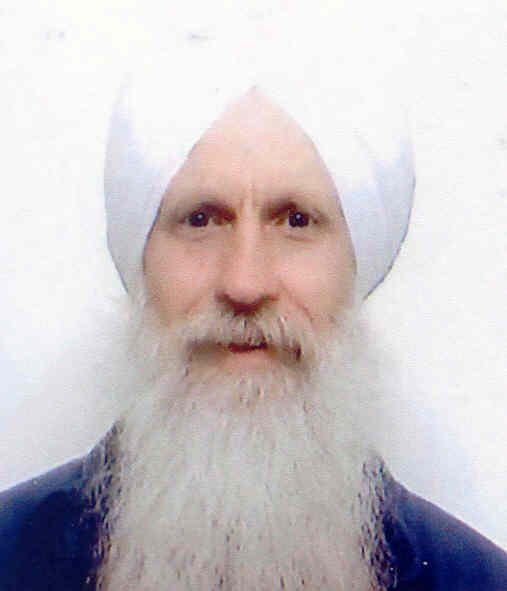
MSS Nirvair Singh Khalsa began studying with Yogi Bhajan in 1971. He is a retired University Instructor at the University of Alaska, Anchorage, where he taught classes in Kundalini Yoga for 31 years. He has authored nineteen best-selling DVDs/Videos and four books on Kundalini Yoga as taught by Yogi Bhajan. (www.kundaliniyoga.net) He has also taught classes, workshops and trainings throughout the Americas, Europe, and Asia. He is a Lead Trainer with Kundalini Research Institute. He lives with his wife of 49 years, Nirvair Kaur, in Tesuque, New Mexico.


« Understanding Through Compassion
In Memoriam – SS Sada Simran Singh Khalsa »
The Beauty and Grace of Charan Jap

The Beauty and Grace of Charan Jap

by MSS Nirvair Singh Khalsa, Tesuque NM
Winter 2020

On a daily basis, I walk in our neighborhood. I walk on dirt roads for 45 minutes to an hour. There is virtually no traffic and just an occasional neighbor with whom to smile, wave, or exchange a few words.

I walk with Mantra. My mantra of choice is the Guru Gaitri Mantra: Har Har Har Har Gobinday, Har Har Har Har Mukanday, Har Har Har Har Udaaray, Har Har Har Har Apaaray, Har Har Har Har Haree-ang, Har Har Har Har Karee-ang, Har Har Har Har Nirnaamay, Har Har Har Har Akaamay.*

In the early 1980s, I spoke with Yogi Bhajan about walking and running techniques that I could practice and teach. I subsequently taught many classes in Kundalini Yoga for Walkers and Runners and have used what he taught me since that time.

My walking routine has grown and developed over the years. My walks have three facets or phases: experience, process, and merger.

The experience phase is nurturing and life-enhancing. Moving my body in rhythm with the silently-chanted mantra is just plain fun. I immediately start to engage with my environment—feeling my movement and breath, feeling the air and temperature, and listening for the environmental sounds of the wind, the trees, and the birds. Many walks just have me engaged with the experience phase.

The process phase is when I begin to observe my mind and my thoughts. Whatever is on my mind floats to the surface and will frequently supplant the other parts of my walking experience. When I recognize this, I re-engage with the mantra. I let the thoughts flow with the mantra. And then the magic happens.

I will start to use my senses and walking experience and even out all the internal and external input I am receiving. The importance of my thoughts blends equally with an awareness of my experiential senses and the mantra.

This is when the merger phase begins. My awareness expands to the earth, the sky, what is behind, which is a flow of the past, and a deep stillness that merges with the mantra. The movement of walking and the experience of my breath and senses open up the present moment. There is no effort and no projection or fear of the future.

I enjoy walking!

“This mantra is composed of eight words about God, with four Hars added to it. Chant it from the navel and listen to it. The mantra brings prosperity, happiness, and saves us from calamities.  It is a sound current that brings a shield and brings good luck and removes discomfort and disease.  It is the key to the doorway of self-elevation.”—Yogi Bhajan

About the Author

MSS Nirvair Singh Khalsa began studying with Yogi Bhajan in 1971. He is a retired University Instructor at the University of Alaska, Anchorage, where he taught classes in Kundalini Yoga for 31 years. He has authored nineteen best-selling DVDs/Videos and four books on Kundalini Yoga as taught by Yogi Bhajan. (www.kundaliniyoga.net) He has also taught classes, workshops and trainings throughout the Americas, Europe, and Asia. He is a Lead Trainer with Kundalini Research Institute. He lives with his wife of 49 years, Nirvair Kaur, in Tesuque, New Mexico.


Current Newsletter

#101 – 2026 Newsletter (Third Quarter)

Secretary of Religion Column (2026 Third Quarter)

Minister News & Notes (2026 Third Quarter)

The Guru as our Sustainer

The Guru Carries Me

Gobind: The Sustainer

Beauty and Order in the Guru’s Court

In Memoriam – SS Sangeet Kaur Khalsa

Previous Issues


Ministry Newsletter Team

CONTACT US:  [email protected]  PO Box 2213 | Espanola, NM 87532 | USA

© 2015-2026 The Office of the Secretary of Religion, Sikh Dharma International | All Rights Reserved | Site by Khalsa Designs | Photography Credits